Common Steel Pipe Standards Used in Pipeline Service
Steel pipes used in the pipeline service industry must comply with internationally recognized standards to ensure safety, durability, pressure resistance, and long-term operational reliability. These standards define material grades, manufacturing processes, testing requirements, dimensional tolerances, and inspection procedures for pipeline applications.
Different industries such as oil & gas, water transmission, petrochemical, offshore engineering, and power generation may require different steel pipe standards depending on operating conditions and project specifications.
One of the most widely used standards in pipeline service is American Petroleum Institute API 5L, covers seamless and welded steel pipes used for:
- Oil pipelines
- Natural gas transmission
- Petroleum transportation
- Water and slurry pipelines
Common API 5L Steel Grades: Grade A, B, X42-X80
API 5L includes two product specification levels:
- PSL1: Standard quality requirements
- PSL2: Stricter chemical composition, mechanical properties, and testing requirements, are commonly used in critical pipeline projects.
ASTM Standards for Pipeline Service
ASTM A53: commonly used in low- and medium-pressure pipeline systems and covers welded and seamless steel pipes for:
- Mechanical applications
- Pressure applications
- Water transmission
- Structural service
ASTM A106: Widely used in power plants and petrochemical facilities and designed for:
- High-temperature service
- Refinery piping
- Industrial fluid transport
ASTM A333: covers seamless and welded steel pipes for low-temperature applications, including:
- LNG projects
- Cryogenic systems
- Cold-environment pipelines
EN Standards for Pipeline Steel Pipes
EN 10217: specifies welded steel pipes for pressure purposes. Applications include:
- Water transport
- Industrial pipelines
- Pressure systems
EN 10216: covers seamless steel pipes for pressure applications and high-temperature service.
EN 10208: specifically designed for steel pipes used in combustible fluid transportation systems such as natural gas pipelines.
ISO Standards
ISO 3183: standardizes steel pipes for pipeline transportation systems in the petroleum and natural gas industries. It aligns closely with API 5L and is commonly specified in international pipeline projects.
Standards for Stainless Steel Pipeline Pipes
ASTM A312: covers seamless and welded stainless steel pipes for:
- Corrosive fluid transport
- Chemical processing
- Offshore systems
- High-temperature service
Pipeline Coating Standards
Pipeline service often requires external and internal protective coatings. Common coating standards include:
- DIN 30670–3LPE coatings
- ISO 21809 — Pipeline coating systems
- AWWA C210 — Liquid epoxy coatings
- CSA Z245 — External pipeline coatings
Inspection and Testing Standards
Pipeline steel pipes must undergo strict inspection and testing procedures. Common tests include:
- Hydrostatic testing
- Ultrasonic testing (UT)
- Eddy current testing
- Radiographic testing (RT)
- Magnetic particle inspection (MPI)
- Dimensional inspection
- Coating thickness testing
Selecting the Right Steel Pipe Standard
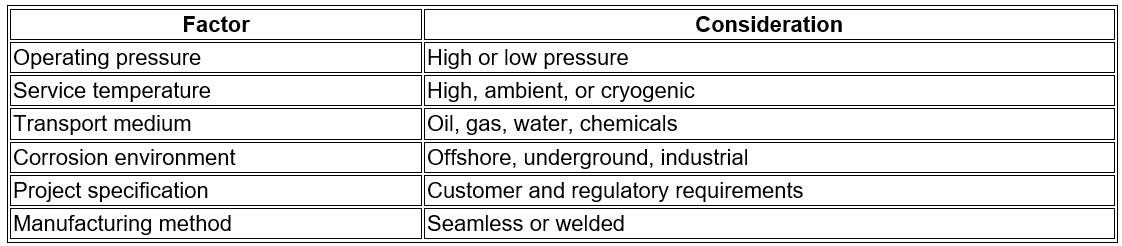
Proper standard selection improves pipeline safety, reliability, and project compliance, choosing the correct standard depends on several factors:
Conclusion
Steel pipe standards are essential for ensuring safe and efficient pipeline service operations across oil & gas, water transmission, industrial processing, and infrastructure projects. Standards such as API 5L, ASTM A53, ASTM A106, EN 10217, and ISO 3183 define critical requirements for manufacturing, testing, and performance.
By selecting the appropriate steel pipe standard, pipeline operators and project engineers can achieve reliable performance, long service life, and compliance with international quality requirements.


Comments
Post a Comment